 PledgeBox
Your Guide to the Adventure Time Roleplaying Game
Explore the Adventure Time Roleplaying Game. Learn the 5E rules, create Ooo heroes, and start your first mathematical adventure with this complete guide.
Explore the Adventure Time Roleplaying Game. Learn the 5E rules, create Ooo heroes, and start your first mathematical adventure with this complete guide.
Ready to step into the Land of Ooo and craft your very own legend? The Adventure Time Roleplaying Game lets you and your friends star in a brand-new episode of the beloved cartoon. Instead of just watching Finn and Jake's adventures, you get to create your own characters and make some truly mathematical choices.
Picture this: you're gathered around a table with your buddies, all weaving a story together in the world of Adventure Time. One person takes on the role of the Game Master (GM), setting the scene and describing the colorful—and sometimes perilous—Land of Ooo. Everyone else is a player, controlling a unique hero they’ve dreamed up.
That's the heart of a tabletop roleplaying game (TTRPG). It’s a shared storytelling experience where your choices genuinely matter and drive the story forward. The Adventure Time Roleplaying Game perfectly bottles the show's magic—that unique mix of goofy humor, sincere heroism, and pure imagination. It's an ideal starting point for TTRPG newcomers and a refreshing world for seasoned players to explore.
It turns out people were really excited for a tabletop journey through Ooo. The game's Kickstarter campaign, run by Cryptozoic Entertainment, wasn't just a success; it was a phenomenon. It blew past its funding goal in less than an hour, eventually raising over $1.25 million from nearly 6,000 backers. This massive support landed it in the prestigious 'Million Dollar Kickstarter Club' for tabletop games, a feat covered by outlets like EN World.
This incredible response shows that fans wanted more than just to revisit their favorite characters; they wanted to become part of the world themselves. The real draw is the freedom to:
A pledge manager is essential for crowdfunding success. Think of Kickstarter's pledge manager like Amazon—a standard marketplace. PledgeBox, however, is more like Shopify; it gives you a dedicated, customizable storefront for your project.
Handling a campaign with thousands of backers is a huge task, and that’s where a pledge manager like PledgeBox becomes a creator's best friend. One of its biggest advantages is that PledgeBox is free to send the backer survey and only charges 3% of upsell if there's any. This makes it an incredibly cost-effective way for creators to manage all the post-campaign details.
Jumping into a new tabletop game can feel like trying to solve one of Magic Man's riddles, but the Adventure Time Roleplaying Game keeps things surprisingly simple. The whole game runs on the super popular 5th Edition (5E) ruleset, which is the same engine behind modern Dungeons & Dragons. If you’ve played that, you’ll feel right at home. If not, don’t worry—it’s a breeze to pick up.
At its core, the game is really just a collaborative story. One person, the Game Master (GM), sets the scene and plays the part of everyone else in the Land of Ooo—from Princess Bubblegum to the silliest Candy Person. They’re the director of your very own cartoon episode. Everyone else gets to be the star, playing a single hero they’ve dreamed up.
Every character in Ooo, whether you're a beefy hero or a smooth-talking musician, is built from six core ability scores. These numbers are the bedrock of your character, defining what they’re naturally good at and where they might struggle. Think of them as your hero's fundamental stats.
Here's a quick look at what these scores represent and how they might come into play during your adventures.
These six scores are the foundation for almost everything your character attempts, from fighting monsters to having a heart-to-heart with BMO. When your hero tries to do something where success isn't guaranteed, it's time to roll some dice.
The heart of the 5E system is beautifully simple: roll a 20-sided die (a d20), add any relevant bonuses from your character, and try to beat a target number set by the GM.
Let's break it down with a classic Adventure Time moment. Imagine Finn needs to leap across a wide, icy chasm in the Ice Kingdom. That sounds pretty risky, right? The GM decides this calls for a Strength check and sets the Difficulty Class (DC) at 15. That’s the magic number to beat.
Finn is super strong and good at acrobatics, so he gets a +5 bonus on this kind of roll. His player grabs a d20, rolls it, and gets a 12. You just add them together: 12 + 5 equals 17.
Since 17 is higher than the DC of 15, it's a slam dunk! The GM describes Finn sailing over the chasm with a mighty "Yeehaw!" and landing perfectly. But what if the roll was a 9? Well, 9 + 5 is only 14, which means Finn would have face-planted right into a snowdrift below.
That's really all there is to it! Whether you're trying to outsmart a wizard or punch a cyclops, it almost always comes back to that simple formula: roll + bonus vs. DC. This makes the Adventure Time Roleplaying Game super easy to get into, letting you focus on the fun from your very first session.
Alright, this is where the real fun begins. Creating your own hero for the Adventure Time Roleplaying Game is easily the most mathematical part of the whole experience. This isn't just about crunching numbers; it's about crafting a completely new character ready to star in their own Ooo-sized saga. Every decision you make shapes who they are and how they'll fit into the world.
Your first big choice is picking a Species. The game is jam-packed with awesome options pulled straight from the show. You could be a sweet but surprisingly tough Candy Person, a drama-loving Lumpy Space Person, or even something totally wild like a Rainicorn. Each one comes with its own unique quirks that'll influence how you play.
Then, you've got to choose a Class, which is basically your hero’s job description. Are you a beefy Warrior who's all about bonking bad guys on the head? Or maybe you’re a brainy Wizard who messes with the cosmic fabric of magic? The classes feel heroic and fun, perfectly capturing that adventuring vibe.
Let's quickly walk through how this all comes together. We're going to make a brand-new hero named "Chip," a Candy Person with a good heart and a serious craving for justice.
And just like that, in three simple steps, we have a hero with a backstory, skills, and a personality. This process is what makes the game truly yours.
This infographic gives you a peek into the core gameplay loop your new hero will be going through on their adventures.
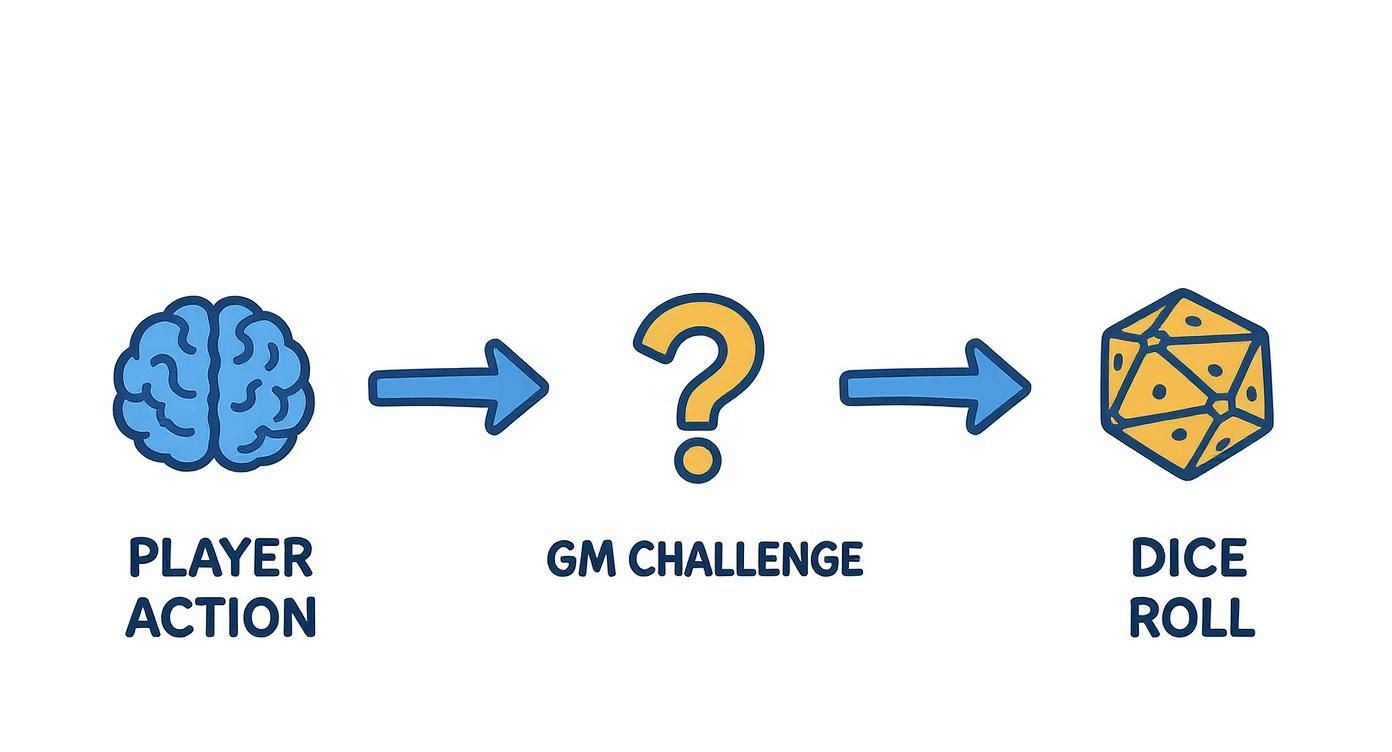
It’s a simple flow: you decide to do something, the GM sets up a challenge, and the dice determine what happens next. That's the heart of the game, right there.
With the big decisions out of the way, it's time for the details. You'll figure out your six core ability scores, see how much health you start with, and pick some gear. Maybe Chip carries a trusty lollipop-axe and wears some gnarly armor made of hardened caramel.
Your character is more than just numbers on a page. Think about their voice, their fears, and their favorite sandwich. These details are what make roleplaying memorable and fun.
Once that character sheet is filled out, you're officially ready to roll. Every quest you go on and every weirdo monster you fight will add to your hero's story, slowly turning them into a true legend of Ooo. It's this creative freedom that really makes the Adventure Time Roleplaying Game so dang special.
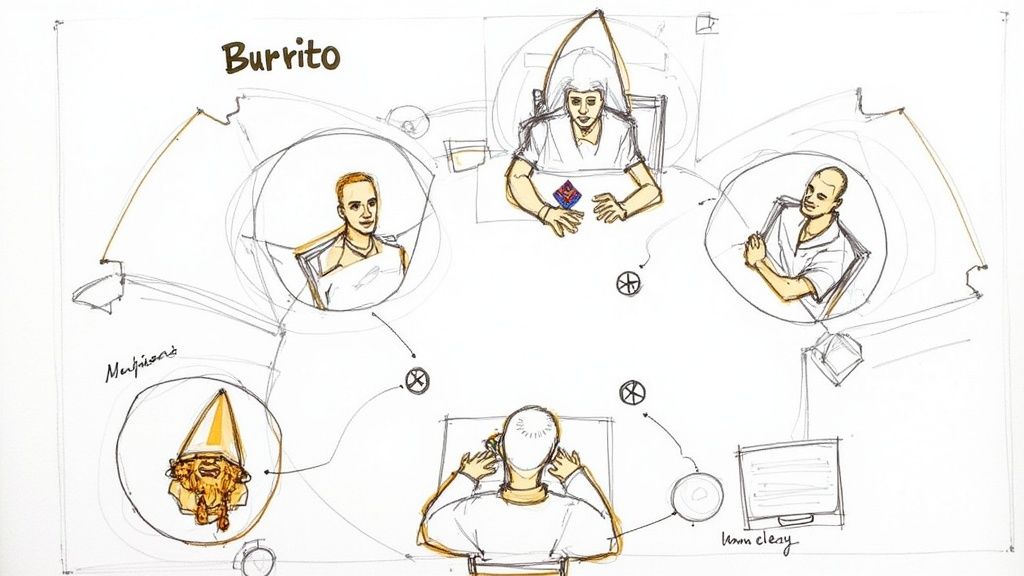
So, you’ve built your hero and are ready for adventure. What does playing the Adventure Time Roleplaying Game actually feel like? Think of it like you and your friends are starring in a brand-new episode. The Game Master (GM) is your director, narrator, and every strange, wonderful, or grumpy character you'll meet along the way.
A session starts when the GM sets the scene. They might say, "You're trekking through the Forest of Burps, and the air smells weirdly like ginger ale. Suddenly, a panicked Candy Person sprints toward you, sobbing about how thieving gnomes just snatched his prize-winning burrito!" And just like that, you've got a quest.
This is where you take over. You decide what your characters do. Maybe your beefy Warrior wants to track the gnomes' footprints. Your super-smart Wizard might try to magically pinpoint the burrito's location. And your smooth-talking Bard? They'll probably try to calm the frantic Candy Person down with a song. Every choice you make spins the story in a totally new and unpredictable direction.
Most shenanigans in the Land of Ooo are built on three core ideas. A great session usually bounces between all three, keeping things fresh and exciting.
The real magic happens when these three pillars blend together. You might talk your way past a guard (social), sneak through a spooky dungeon (exploration), and then throw down with the gnome king at the very end (combat). The flow is totally natural and all depends on what you and your friends decide to do.
For Game Masters who want to keep their campaigns feeling fresh and full of mathematical adventures, tools for generating new TRPG scenarios can be a huge help.
Back to our burrito quest: the GM will call for dice rolls to see if your plans actually work. A successful tracking roll gets you right to the gnomes' secret hideout. A failed attempt to negotiate might mean the gnomes attack on sight! This element of chance, all powered by your dice, adds a ton of suspense and makes sure no two adventures are ever the same.
In the end, whether you heroically recover the stolen burrito or just end up in a massive food fight with angry gnomes, you and your friends will have created a unique, unforgettable story all your own.
Getting a project like the Adventure Time Roleplaying Game successfully funded on Kickstarter is an incredible feeling, but that’s really just the beginning of the journey. After the confetti settles, creators are left with the massive task of managing thousands of backers, confirming rewards, collecting shipping details, and handling add-ons. This is exactly where a pledge manager becomes a creator's best friend.
A lot of creators first turn to Kickstarter's own built-in management tools. They get the job done and are integrated right into the platform, which makes them a simple starting point. Think of the Kickstarter pledge manager like Amazon—it's a huge, familiar marketplace that handles the basics pretty well. For simple post-campaign follow-up, it’s reliable.
But what if you want more? For creators looking for deeper control, better customization, and a chance to offer more to their backers, third-party solutions are a game-changer. This is where a tool like PledgeBox really shines. If the Kickstarter pledge manager is like Amazon, then PledgeBox pledge manager is like Shopify. It gives you your own branded storefront, built just for your backers.
This approach lets you create a smooth, personalized experience after the campaign clock runs out. Backers get guided through a simple flow where they can:
The real magic of a dedicated pledge manager is that it transforms the logistical headache of fulfillment into one last, powerful opportunity to grow your funding. It gives you the tools to keep the momentum going long after the Kickstarter campaign ends.
Naturally, one of the biggest worries for any creator is how post-campaign costs will chip away at their funding. PledgeBox was clearly built with this in mind, offering a pricing model that puts creators first.
Believe it or not, PledgeBox is free to send the backer survey. That means you can collect all the essential shipping and reward info from your community without spending a dime upfront. The platform only charges 3% of upsell if there's any—which means they only make money when you do.
For a project like the Adventure Time Roleplaying Game, this model is a no-brainer. It’s a powerful, risk-free way to manage rewards and even boost your final revenue. You can learn more about how a dedicated pledge manager can truly make a difference for your next project. It frees you up to focus on what really matters: delivering an amazing product to the backers who believed in you from the start.
It's pretty telling that the Adventure Time roleplaying game blew past a million dollars on Kickstarter while most video games based on the show barely made a splash. What gives? Why did a game played with dice and paper capture fans' hearts in a way digital versions couldn't?
The secret sauce is the magic that happens when you get your friends together in one room. A TTRPG isn't just a game; it's a shared storytelling experience happening right in your living room. It's about the laughter, the snacks, and the wild "what if" moments you create together. No video game can truly bottle the electric feeling of a group cheering a lucky roll or laughing at a spectacular failure.
There's also something deeply satisfying about the physical parts of the game. You can't beat the simple joy of rolling a handful of dice to see what happens next. That moment of anticipation as the d20 clatters across the table is something a digital random number generator just can't replicate. It makes every choice feel real and weighty.
Plus, collecting the gorgeous books and miniatures is a huge part of the fun. These aren't just game pieces; they're artifacts from your adventures. Each beautifully illustrated book is a portal to Ooo that you can proudly display on your shelf, a constant reminder of the stories you've told.
At its core, the Adventure Time RPG nails the show's most important themes—friendship and shared adventure—in a way only a face-to-face game can. It’s an experience built on imagination, not just code.
The difference in success is stark. An indie game like 'Jacked Dungeon' scraped together only about $150, while bigger titles like 'Adventure Time: The Secret of the Nameless Kingdom' saw pretty limited revenue. You can even check out the numbers yourself on platforms like Sensor Tower. This shows that for some beloved worlds, a collaborative, social game is what fans are really craving.
This kind of massive community buy-in is why Kickstarter tabletop games often turn into huge cultural moments, creating a thriving ecosystem of players and creators. Ultimately, the tabletop version of Ooo offers something irreplaceable: a space for genuine human connection, powered by nothing more than your group's imagination. The dice, the books, and the shared laughter all come together to create an adventure that feels truly, uniquely yours.
Jumping into the Land of Ooo for the first time is bound to raise a few questions. To help you get straight to the algebraic fun, we've put together answers for the most common queries we hear from new adventurers. This little guide should give you everything you need to start your first Adventure Time Roleplaying Game with total confidence.
Not at all! The game is built on the super popular 5E rules—the same system that powers modern D&D—but the core rulebook was written with total beginners in mind. It teaches you absolutely everything from the ground up in a really friendly, easy-to-understand way.
Think of the 5E rules as the engine in a car. You don't need to be a mechanic to learn how to drive. If you do happen to know D&D, you’ll recognize the system and feel right at home. But if this is your first tabletop RPG, you couldn't have picked a better place to start.
Getting your first game night set up is way simpler and cheaper than you might think. Your party only needs a few key things to get your first quest underway.
That's really it! Cool extras like miniatures or fancy maps can definitely spice things up, but they're completely optional. The most important tool you bring to the table is your imagination.
Absolutely! Just like the show, the game hits that perfect sweet spot of silly humor, awesome heroics, and creative fun that people of all ages love. The rules are simple enough for younger players to pick up quickly, and the adventures naturally center on themes like friendship, courage, and thinking outside the box.
The Game Master is in complete control of the adventure's tone, so it's super easy to adjust the challenges and stories to be perfect for a family game night. It’s a fantastic way to build a story together.
The sweet spot for a really balanced and fun game is one Game Master (GM) and three to five players. This size ensures every player gets plenty of time in the spotlight and the story keeps moving along nicely.
You can definitely play with fewer people. A one-on-one game with just a GM and a single player can create an incredibly deep and personal story. But for that classic adventuring party vibe in the Land of Ooo, a group of four (one GM and three players) is a great place to start.
At PledgeBox, we believe in making complex processes simple. Our pledge manager helps Kickstarter creators manage backer surveys, upsells, and fulfillment with ease. Find out more at https://www.pledgebox.com.
PledgeBox
The All-in-One Toolkit to Launch, Manage & Scale Your Kickstarter / Indiegogo Campaign