 PledgeBox
How to Reduce Shipping Costs for Your Crowdfunding Campaign
Discover how to reduce shipping costs for your crowdfunding campaign. This guide covers packaging, carrier rates, and using a pledge manager to save money.
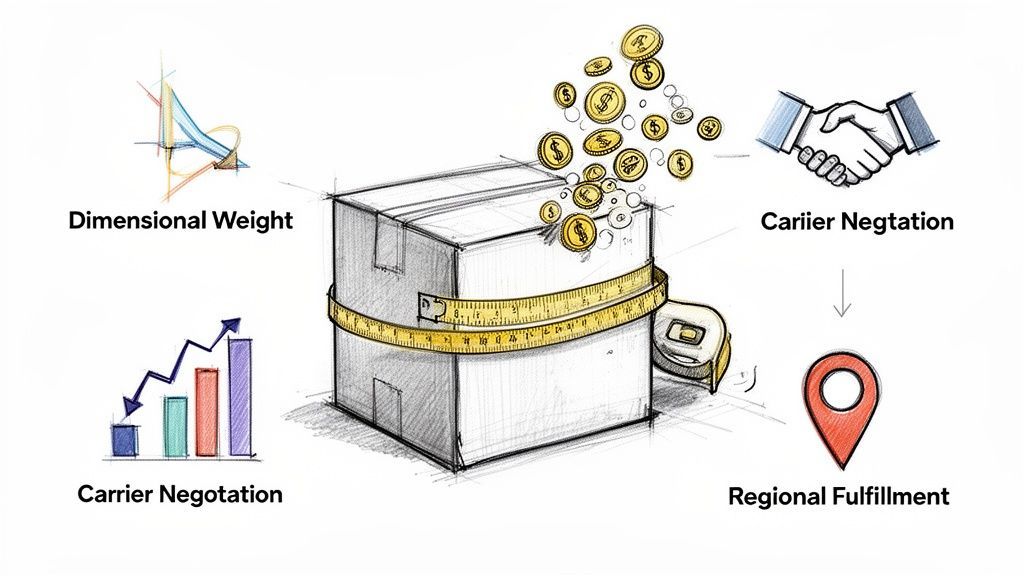
Discover how to reduce shipping costs for your crowdfunding campaign. This guide covers packaging, carrier rates, and using a pledge manager to save money.
Shipping can quietly sink a successful crowdfunding campaign, but it doesn't have to. The secret isn't some magic bullet; it's a smart, holistic strategy that combines proactive planning, optimized packaging, and the right tech. This turns fulfillment from a campaign-killing liability into a streamlined, cost-effective process.
This guide is your concrete playbook for cutting shipping costs long before the last pledge comes in.
High shipping costs are the notorious profit killer for crowdfunding creators. What looks like a simple line item during your campaign planning can quickly spiral out of control, eating away at the funds you worked so hard to raise.
The real challenge? Fulfillment isn't just about sticking a label on a box. It's a complex dance of packaging choices, dimensional weight calculations, international duties, and backer management. Just one misstep here can cascade into thousands of dollars in unexpected expenses.
This is where a strategic approach is a total game-changer. Moving past generic advice means looking at your entire post-campaign workflow as a system you can fine-tune for efficiency. The entire process—from planning and packing to the final shipment—is a critical sequence for keeping expenses in check.
This flowchart breaks down the fundamental stages every creator needs to master.
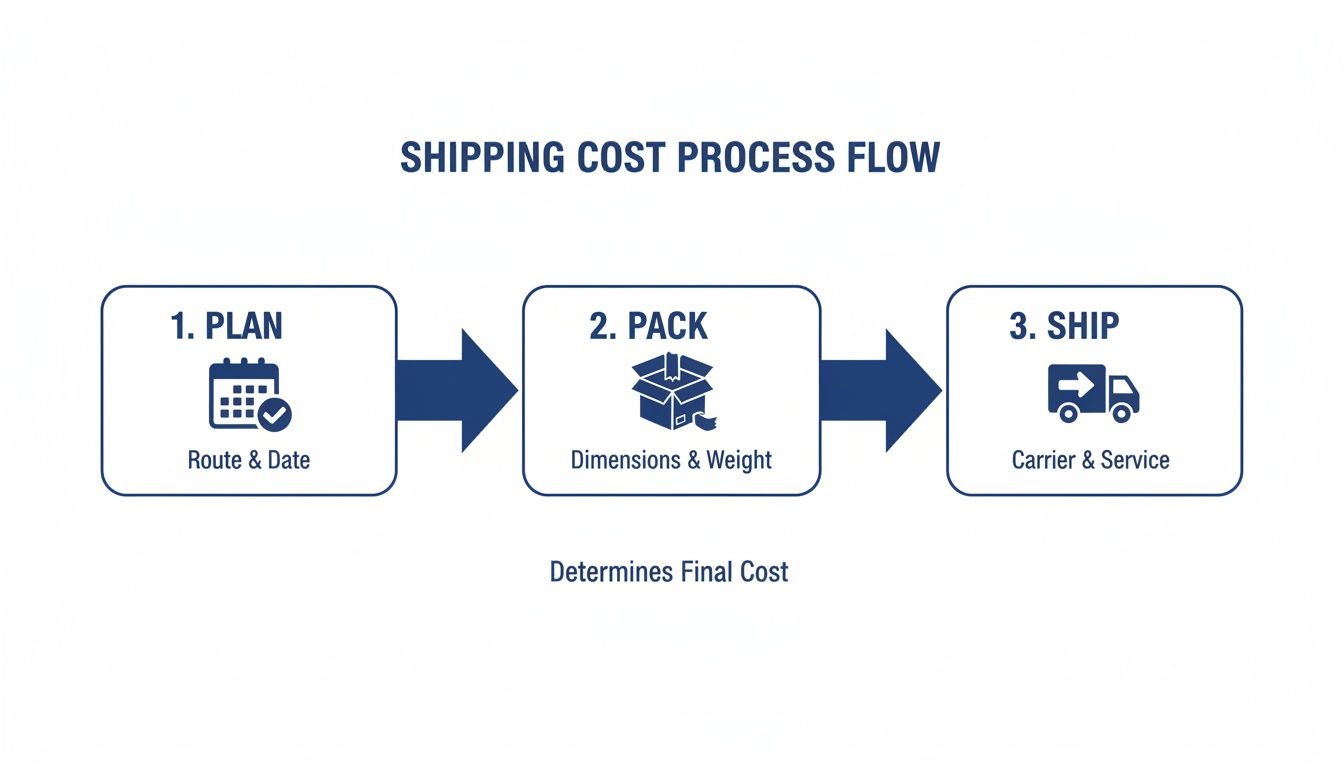
What this really shows is that cutting costs isn't about one single action. It's about a series of interconnected decisions you make during planning, packaging, and finally, carrier selection.
A modern pledge manager is your post-campaign command center, giving you direct control over all these variables. Trying to manage fulfillment using only the native Kickstarter tools is like selling on Amazon—you're stuck inside their rigid system with some major limitations.
Using a dedicated pledge manager like PledgeBox, on the other hand, is like having your own Shopify store. You get full control over the backer experience, your data, and most importantly, the financial details of getting rewards out the door.
Here's a key insight for creators: PledgeBox is free to send the backer survey and only charges a 3% fee on upsell revenue if you generate any. This model flips your fulfillment tool from a cost center into a potential profit generator.
To really slash shipping expenses, you need to think beyond just the mail carriers. It all starts with building a solid operational foundation from day one. You'll also find that implementing overall proven procurement cost reduction strategies can create significant savings across your entire operation, not just shipping.
This playbook will walk you through the essentials for a profitable fulfillment experience, including:
To get started, it helps to understand what drives costs up and how you can counter those forces.
Here’s a quick overview of what inflates shipping expenses for creators and the smarter strategies you can use to lower them.
| Cost Driver | The Common (Costly) Mistake | The Strategic (Cost-Saving) Solution |
|---|---|---|
| Packaging Size | Using a one-size-fits-all box and filling gaps with packing material. | Right-sizing boxes to your product to minimize dimensional weight. |
| Carrier Rates | Accepting standard "retail" shipping rates without question. | Negotiating bulk discounts directly or through a fulfillment partner. |
| International Shipping | Shipping all international orders from a single domestic warehouse. | Using regional fulfillment centers to ship "domestically" within a region. |
| Address Errors | Manually entering backer addresses, leading to typos and returned mail. | Automating address validation with pledge manager software. |
| Duties & VAT | Making backers pay unexpected fees on delivery, causing frustration. | Collecting duties/VAT upfront in the pledge manager for a smooth delivery. |
By tackling each of these common mistakes with a strategic solution, you can systematically bring your fulfillment costs down and keep your backers happy.
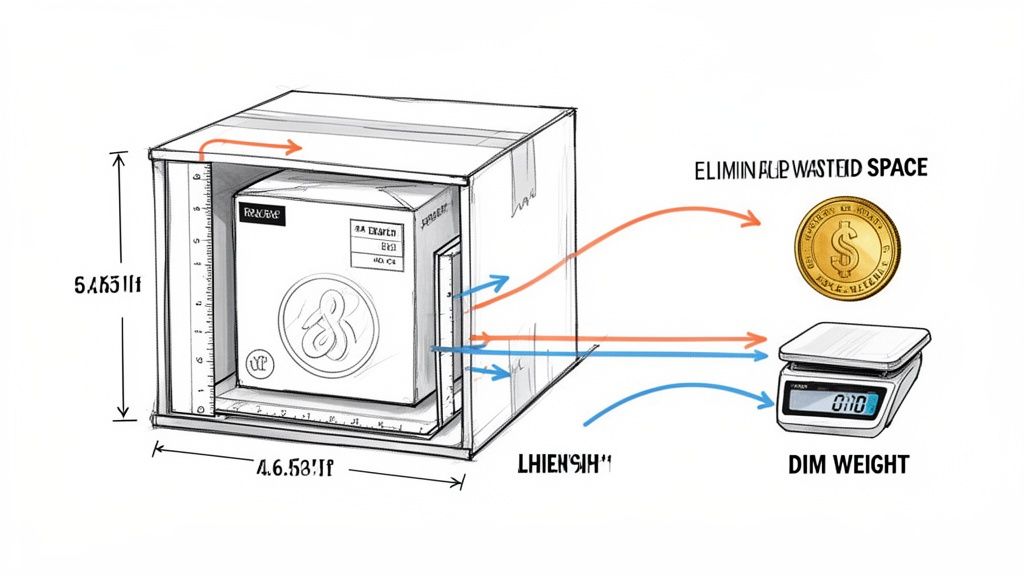
When your final shipping bill arrives, it often boils down to two simple factors: how big your package is and how much it weighs. But in the world of logistics, "weight" can be deceptive. Shipping carriers use a pricing model that can sneakily drive up your costs if you aren't paying close attention to your packaging.
This model is built around something called dimensional weight, or DIM weight. It's a formula carriers use to charge you for the space your package occupies on a truck or plane, not just its actual weight on a scale. If your box is large but light—think foam inserts or a miniatures set with a lot of air inside—you'll get billed for whichever is higher: the actual weight or the dimensional weight.
For a crowdfunding creator, this is a make-or-break concept. Every inch of wasted space inside that box is an inch you're paying for, and it eats directly into your project's profitability.
Imagine a delivery truck packed to the gills with boxes. The carrier's goal is to make as much money as possible from that limited space. A creator shipping a lightweight but bulky product in a roomy box takes up far more valuable real estate than someone shipping a small, dense item of the same actual weight. DIM weight is the carrier’s way of leveling the playing field, making sure they get paid for the volume a package consumes.
This is exactly why mastering your packaging is one of the single most effective ways you can cut down shipping costs. It's not just about grabbing any old box; it’s about strategically engineering your product and its packaging to be as dense and efficient as possible from the very beginning.
Thinking about dimensional weight can't be an afterthought; it has to start long before you’re ready to fulfill. Honestly, you should be thinking about it during the product design phase itself.
Real-World Example: A board game creator I know was staring down some terrifyingly high shipping quotes. The culprit? Their box was just a little too tall. By redesigning the plastic game tray insert, they managed to shrink the box height by just one inch. That tiny change let the game slide perfectly into a standard shipping box, saving them over $3 per package and thousands of dollars across the entire campaign. For a deeper dive, there are some fantastic guides on board game shipping and fulfillment strategies that are worth reading.
The idea of dimensional weight isn't just for individual backer packages. When you start dealing with bulk freight shipping from your manufacturer, these calculations become even more critical. A huge part of getting this right is understanding 1CBM to KG conversion and volumetric weight for both air and sea freight.
Knowing how these calculations work helps you and your freight forwarder pack shipping containers and pallets way more efficiently. This reduces your per-unit landed cost before fulfillment even begins.
At the end of the day, smart packaging decisions create a positive ripple effect. A smaller, denser package isn't just cheaper to ship one by one; it's also cheaper to transport in bulk from your factory. It’s a foundational strategy for protecting your margins and getting your product to backers without breaking the bank.
Once your packaging is dialed in, the next big win for your shipping budget comes down to who you ship with and where you ship from. Too many creators just accept the standard "sticker price" for shipping, leaving a ton of money on the table. Here's the secret: carrier rates are almost always negotiable, and a smart fulfillment network can slash your expenses.
The key is to think like a business, not just a one-off creator. Carriers want volume. Your entire campaign, even if it ships over a few weeks, represents a nice chunk of business for them. You have more leverage than you think—you just have to know how to use it.
Don't be shy about picking up the phone and talking to reps from major carriers like USPS, FedEx, and DHL. Just make sure you come to that conversation prepared. Have your total estimated number of packages, their rough weights and dimensions, and a breakdown of where they’re all going.
This isn’t about sending one package; it's about the hundreds or thousands of rewards you need to get out the door. When you frame it as a single, large-volume project, you can often negotiate discounts that blow the standard retail rates out of the water.
Right now, the global shipping market is actually on your side. A massive overcapacity issue has created a golden opportunity for creators to cut shipping costs. Fleet capacity has jumped by 40% since 2020, but trade volumes haven't kept pace. With global container freight rates now averaging $2,672 per 40ft container (down from peaks over $5,900), creators shipping bulkier items like board games or electronics can potentially save 20-30% on logistics alone. You can read more about the shipping industry's overcapacity on freightamigo.com.
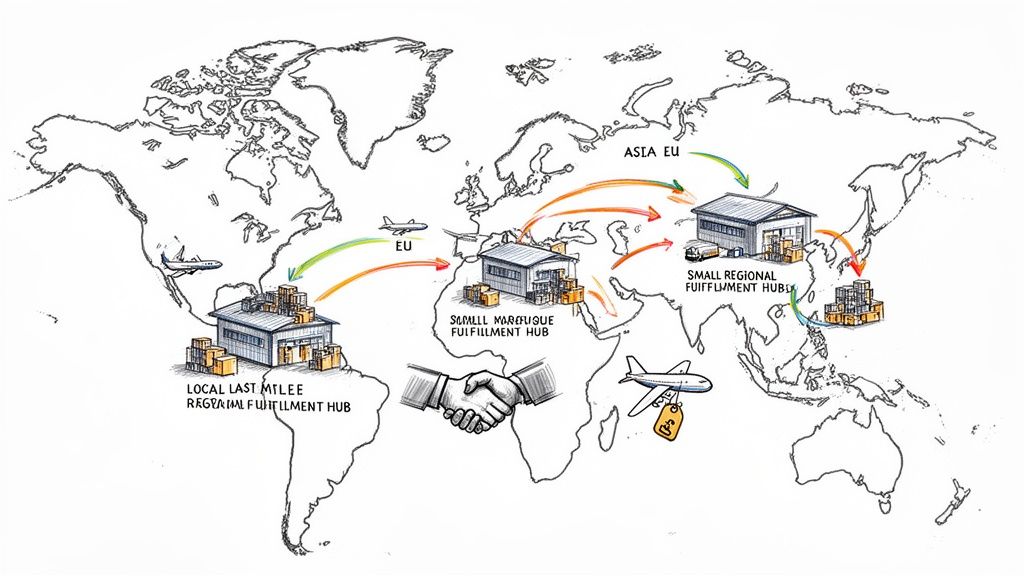
Getting a better deal with carriers is a solid move, but if you have backers all over the world, the single most impactful strategy is using regional fulfillment centers. These are often called third-party logistics (3PL) partners. Instead of shipping every international order from your home base, you send your products in bulk to warehouses in key markets around the globe.
It works like this:
From these local hubs, your individual rewards are sent out using cheap domestic shipping. This one move can easily cut your international shipping costs by more than half.
Working with regional 3PLs brings a trifecta of benefits that go way beyond just saving a few bucks on postage. It fundamentally levels up your entire fulfillment operation and, most importantly, your backers' experience.
A critical piece of this puzzle is having the right tool to manage all these moving parts. This is where your pledge manager becomes absolutely essential. It’s like having your own Shopify for fulfillment, whereas relying only on Kickstarter is like trying to sell on Amazon with all their rigid limitations. A platform like PledgeBox is free to send the backer survey and only charges 3% of any upsell revenue, giving you a powerful, cost-effective way to segment backers by region and export clean order data to each of your fulfillment partners.
Once you've tightened up your packaging and negotiated the best carrier rates, your single most powerful tool for cutting shipping costs is technology. Let's be honest: manual processes are slow, expensive, and a breeding ground for human error. A smart pledge manager, on the other hand, acts as the central nervous system for your entire post-campaign operation, automating critical tasks and even turning potential expenses into revenue.
This is where the right software goes from being a "nice-to-have" to an absolute necessity for a profitable campaign. It’s the engine that powers your fulfillment, ensuring every decision is backed by accurate data. Without it, you're essentially flying blind with spreadsheets and manual data entry—a surefire recipe for costly mistakes.
One of the most common—and infuriating—expenses is re-shipping packages because of bad addresses. We’ve seen it happen time and again. Industry data shows that 10-20% of shipments can fail due to simple typos, old addresses, or weird formatting. Each failed delivery means you're paying for shipping twice, not to mention the cost of a lost product and an unhappy backer.
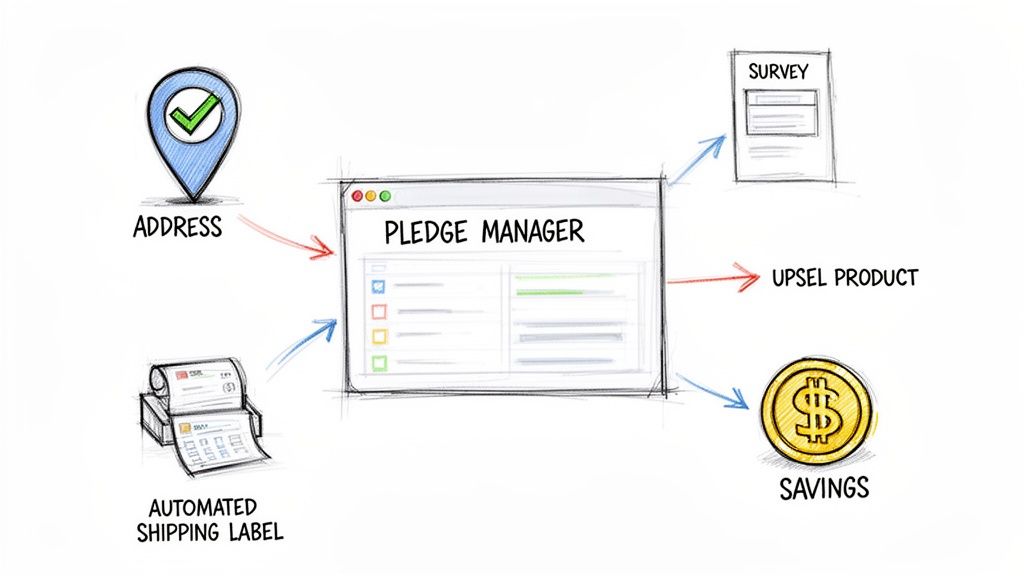
A modern pledge manager virtually eliminates this headache. By integrating tools like the Google Maps API, it automatically validates and corrects backer addresses as they’re typed in.
This one feature alone can save you hundreds, if not thousands, of dollars by making sure packages get to the right place the first time. It's a simple, automated step that delivers a massive return.
A fatal mistake many first-time creators make is charging for shipping during the Kickstarter campaign. Rates change constantly, and it's impossible to know the exact cost for every backer and add-on combination months down the road. The only smart strategy is to collect these fees after the campaign ends, using your pledge manager's branded surveys.
This move protects your margins by letting you charge the most current and accurate rates based on each backer's final order and location. It's also the only practical way to handle the thorny mess of international VAT and sales tax, preventing nasty surprise bills for your backers when their package arrives.
Think of it this way: Kickstarter is the marketplace where you sell the initial dream, like Amazon. But a pledge manager like PledgeBox is your post-campaign storefront, like Shopify, giving you total control to collect the precise funds you need to get the job done right.
This is where a powerful pledge manager completely changes the game. It’s not just about collecting data; it's about generating new revenue that can offset—or even completely cover—your shipping costs. You can easily set up post-campaign upsells, offering backers exclusive add-ons, upgrades, or related products right inside their surveys.
This is the secret weapon of many successful creators. Digital optimization and shipment consolidation are proven tactics to reduce shipping costs, especially as freight rates go wild. For PledgeBox creators—whether you publish board games or build gadgets—this means direct savings. You can use branded surveys to collect accurate VAT and shipping fees, while add-on upsells and late pre-orders help fill containers to capacity, slashing per-unit costs. It’s a strategy that has helped over 8,000+ creators since 2019. You can learn more about how digital tools are reshaping the ocean freight market on gettransport.com.
The financial model of your pledge manager is also a huge factor. For instance, PledgeBox is free to send the backer survey and only charges a 3% fee on new funds raised from upsells. This means there’s no upfront cost to manage your backers, and the tool only makes money when you do. For many campaigns, the revenue from add-ons easily dwarfs this small fee, making your fulfillment platform a net positive for your bottom line. Choosing the right platform is a major decision, and it’s wise to explore your options; you can learn more by reading this guide on how to select the right pledge manager for your campaign's specific needs.
International shipping can feel like the final boss of fulfillment for any creator. It’s where small miscalculations on customs, taxes, and duties can snowball into massive, project-killing expenses. Getting this part right isn't just about saving money—it’s about protecting your brand’s reputation with your international backers.
The single biggest source of backer frustration is the dreaded surprise fee. When a backer has to pay unexpected customs charges just to receive their reward, it can sour their entire experience and lead to negative comments that harm future campaigns. Preventing this starts with a smart shipping strategy.
The two main models for handling international duties are DDP (Delivered Duty Paid) and DDU (Delivered Duty Unpaid). Understanding the difference is critical.
For most crowdfunding campaigns focused on backer satisfaction, DDP is the clear winner. It requires more work, but it's the only way to ensure a smooth, professional delivery that protects your brand. A pledge manager is essential for this, as it allows you to accurately calculate and collect region-specific VAT or GST after the campaign. To get a better handle on this complex topic, you can learn more about the 5 ways to navigate customs and VAT for Kickstarter.
The most advanced and cost-effective way to handle international fulfillment is by using regional fulfillment partners. Instead of shipping every individual package from your home country, you ship your products in bulk to fulfillment hubs in key regions like the EU, UK, Canada, or Australia.
From these hubs, your rewards are shipped to backers "domestically" within that region. This strategy is a game-changer. It dramatically lowers last-mile delivery costs, speeds up transit times, and massively simplifies the customs process for both you and your backers.
Remember, Kickstarter's native platform is like Amazon—it gives you a basic marketplace but with significant fulfillment limitations. In contrast, a pledge manager like PledgeBox operates like your own Shopify store, providing the control needed to manage complex regional shipping.
This is where your pledge manager becomes your command center. You can segment backers by country, export clean order lists to each regional partner, and manage the entire process from a single dashboard.
Smart creators also pay close attention to global freight trends. You can find huge savings by taking advantage of low rates from industry overcapacity. Asia-Europe sea freight lanes, for instance, have seen stable rates that are just a fraction of their pandemic-era highs.
For teams using a platform like PledgeBox, this means you can fulfill globally without gouging your backers. Hardware startups can validate addresses, export clean data to vendors, and track shipments automatically, avoiding the 10-20% error rate that inflates costs. You can explore more about current freight rates and market dynamics on freightos.com.
A pledge manager is free to send the backer survey and only charges 3% of any upsell revenue, turning a complex logistical challenge into a streamlined, cost-effective operation.
Even the most buttoned-up fulfillment plan runs into questions. Getting the right answers is key to protecting your budget and keeping your backers happy. Here are some of the most common shipping questions we see from creators, with answers pulled from years of experience.
This is a two-part answer, and getting it right is crucial. You absolutely must calculate your estimated shipping costs before you launch your campaign. This is non-negotiable for setting a realistic funding goal.
But—and this is the important part—you should always collect the final, exact shipping fees from backers after the campaign ends using a pledge manager.
This post-campaign collection strategy protects you from unexpected carrier price hikes and ensures you don't lose money on fulfillment. More importantly, it lets you charge accurate rates based on each backer's verified address and any add-ons they grab in the survey. That's something you simply can't do perfectly on Kickstarter itself.
When you’re shipping bulky products like board games or electronics, things can get expensive fast. To keep those costs from eating your margins, you need to focus on three areas:
Absolutely. A good pledge manager isn't a cost; it's a profit center. You just have to understand how it works.
A platform like PledgeBox is free to send your backer surveys and manage all your pledge data. The only cost is a small 3% fee on new funds you raise from add-on upsells and pre-orders during the survey phase. For almost every campaign, the new revenue you generate far outweighs that small fee.
When you factor in the direct savings from automated address validation (fewer lost packages) and accurate tax collection, the value is undeniable. The platform easily pays for itself through cost savings and new sales.
The single most dangerous mistake a creator can make is underestimating shipping costs and rolling an "average" fee into the pledge price to offer "free shipping." This is a massive financial gamble that has sunk countless otherwise successful campaigns.
International shipping can easily cost 3 to 5 times more than domestic shipping. A simple average will guarantee you lose a significant amount of money on every single overseas backer.
The right way to do it is to be transparent. Charge for shipping separately after the campaign through a pledge manager, where you can apply precise, region-specific rates. This protects your margins and keeps your entire project financially healthy.
Ready to take control of your fulfillment and stop losing money on shipping? PledgeBox provides the tools you need to manage backers, collect accurate fees, and turn shipping from a headache into a revenue opportunity.
PledgeBox
The All-in-One Toolkit to Launch, Manage & Scale Your Kickstarter / Indiegogo Campaign